Weeknotes 2026-W37 [2026-W37]
- September 17, 2026
- Liam O'Connor, with contributions from Rayhana Amjad, Rob van Glabbeek
This weeknotes is two days late, because I'm still recovering from my arduous travel all the way back to Canberra from Scotland.
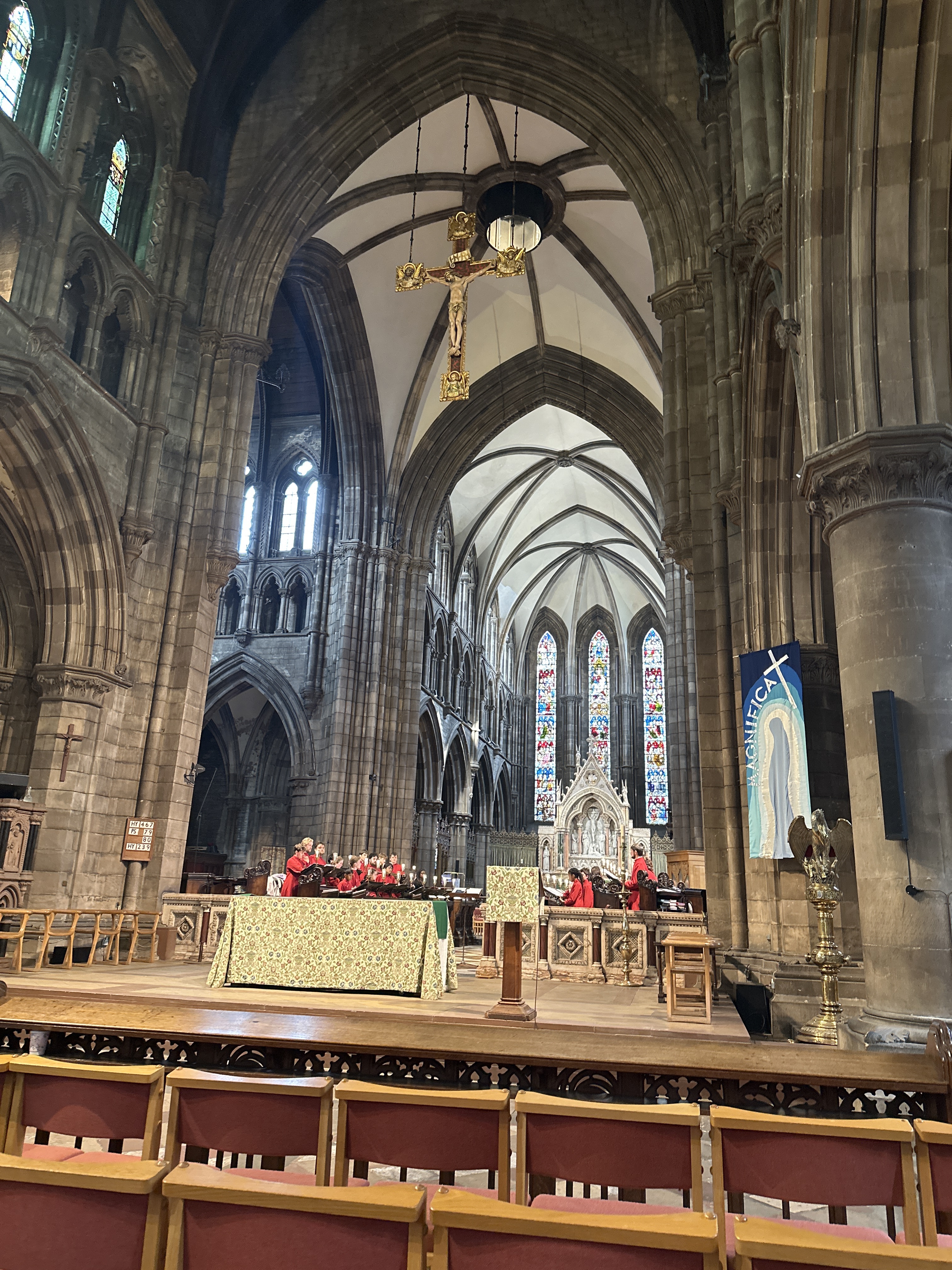
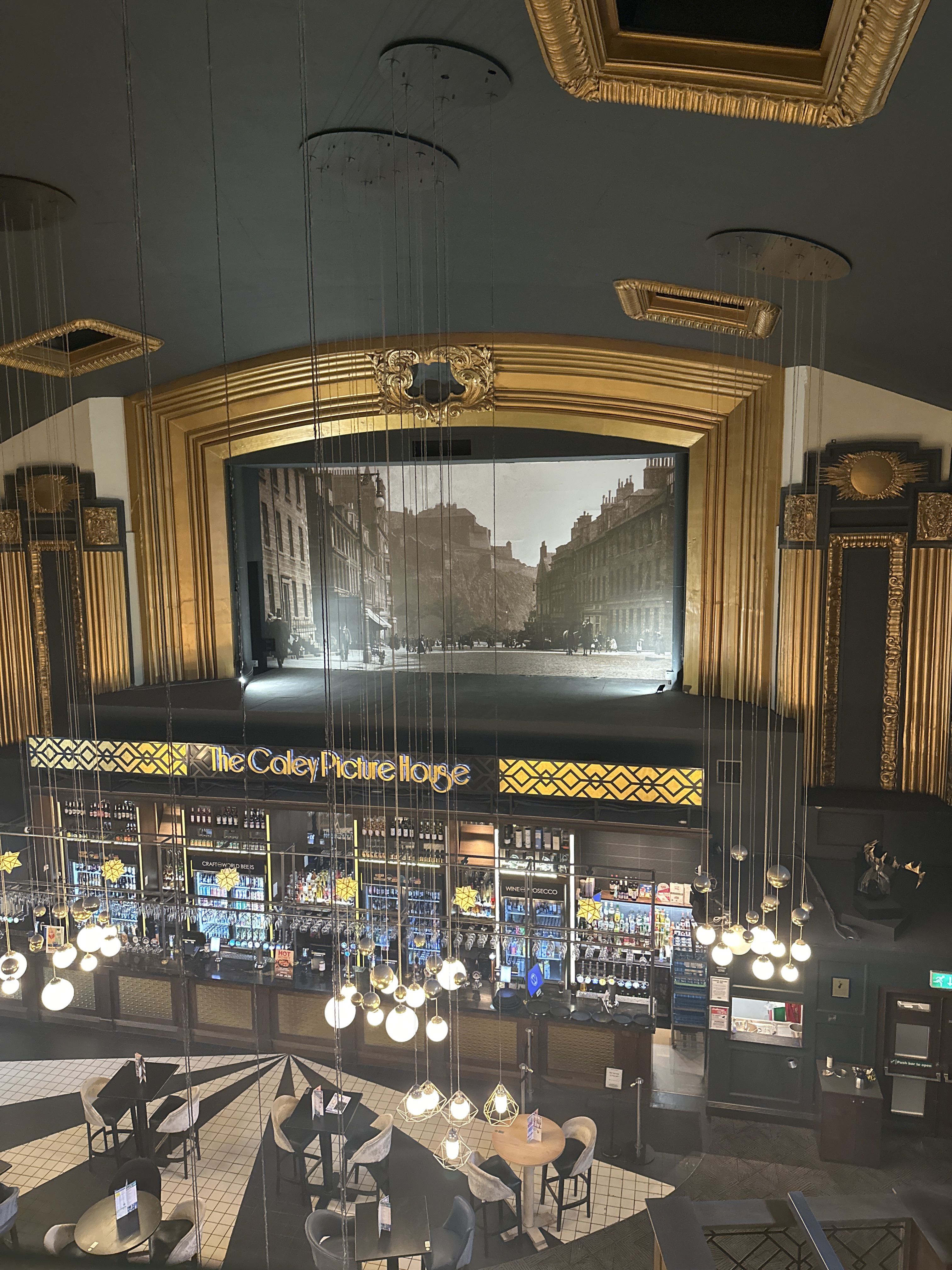
I really enjoyed my time in Edinburgh. Special thanks to Fr. Oliver Brewer-Lennon who always makes me feel so welcome in Edinburgh, and for introducing me to the Caley Picture House, pictured above, a converted art-deco movie theatre that's now a pub. I later went back to have lunch with Philip Wadler before I left.
Happy Birthday, Gordon Plotkin [loc-005G]
- September 8, 2026
- Liam O'Connor
We had a celebration of Gordon Plotkin's eightieth birthday today, featuring many interesting talks. It's hard not to run into Gordon's work if you do anything involving semantics or concurrency or programming languages. My favourite talk of the day was probably my friend Ningning Xie's talk, but I also enjoyed Rob van Glabbeek's talk on his Justness work.
My only major Gordon anecdote is that he was on my interview panel when I interviewed for the job at the University of Edinburgh, and I was astounded to realise that not only was he still alive, but also he somehow didn't appear much older than any of the famous pictures of him.
So, congratulations and happy birthday to the timeless Gordon Plotkin, a huge contributor to our field and an intellectual hero to many of us.
LFCS 40 [loc-005H]
- September 9, 2026
- Liam O'Connor
We had a celebration of 40 years since the foundation of the Laboratory for Foundations of Computer Science (LFCS) by Robin Milner, Rod Burstall and Gordon Plotkin today. This was the institute that I was (and in some sense, remain) part of at the University of Edinburgh. I don't have much time for navel-gazing, and sadly most of the technical talks were either well outside my area, a demonstration of how brain-poisoned by LLMs my former Edinburgh colleagues have become, or both. I didn't really get much out of the day.
I am still glad to be here in Edinburgh for this week, though. It's great to catch up with some old friends.
Wadler 70 [loc-005I]
- September 10, 2026
- Liam O'Connor
While his birthday was back in April, to fit with Plotkin 80 and LFCS 40, we had a birthday event for Philip Wadler today, celebrating his 70th year.
I really loved Conor's talk on dependent session types, which was inspired by a question from Phil ten years earlier at his 60th birthday event. Her proposed design resembles Peter Hancock's interaction structures quite a bit. Very nice work.
I also gave my talk, which I peppered with many anecdotes about meeting Phil. I got a lot of interest about potentially using Holbert-ng, including from Marcelo Fiore among others. Very exciting stuff!
ReferenceDown with Linear Mathematical Developments [oconnor-2026-wadler70]
- September 10, 2026
- Liam O'Connor
- Wadler 70 Meeting, University of Edinburgh, Scotland
This talk presents some of my recent rough work on educational proof assistants. I spent many years building Holbert — a graphical proof assistant and document preparation system — with the eventual goal of writing a PL textbook in it. But Holbert's design, like that of most proof assistants, forces exposition to follow a single linearisation of the dependency order of definitions and theorems, which is a poor fit for good mathematical writing. This talk demonstrates work in progress on the next generation of Holbert, built on top of Forester, the notes system by Jon Sterling and Kento Okura. Forester's transclusion mechanism lets self-contained notes on definitions and theorems be composed bottom-up into a document. Holbert-NG maintains its own separate graph of mathematical dependencies, independent of Forester's document graph, decoupling how a text is composed from the dependency structure of its mathematics.
A nice charity shop find [loc-005J]
- September 12, 2026
- Liam O'Connor
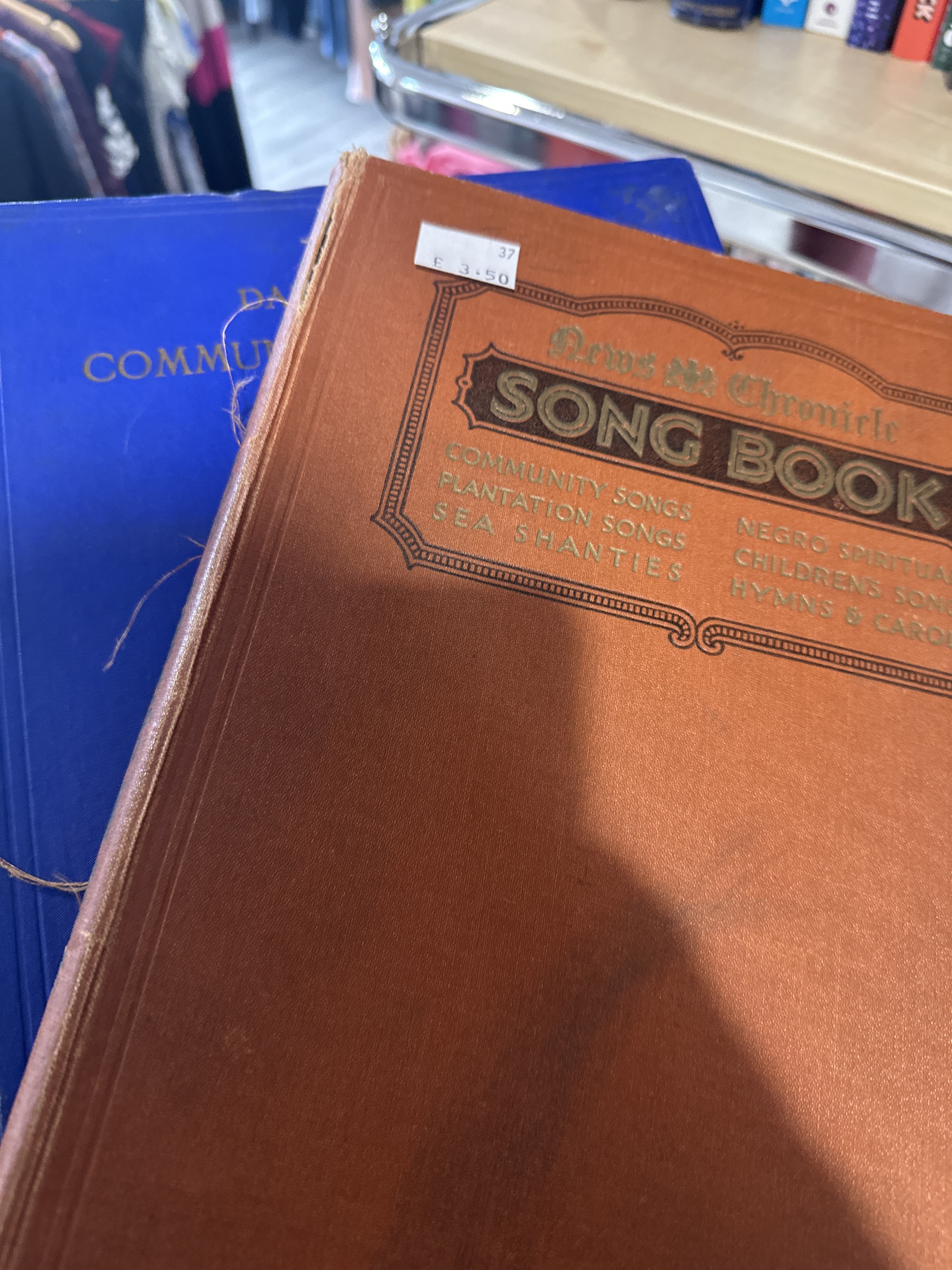
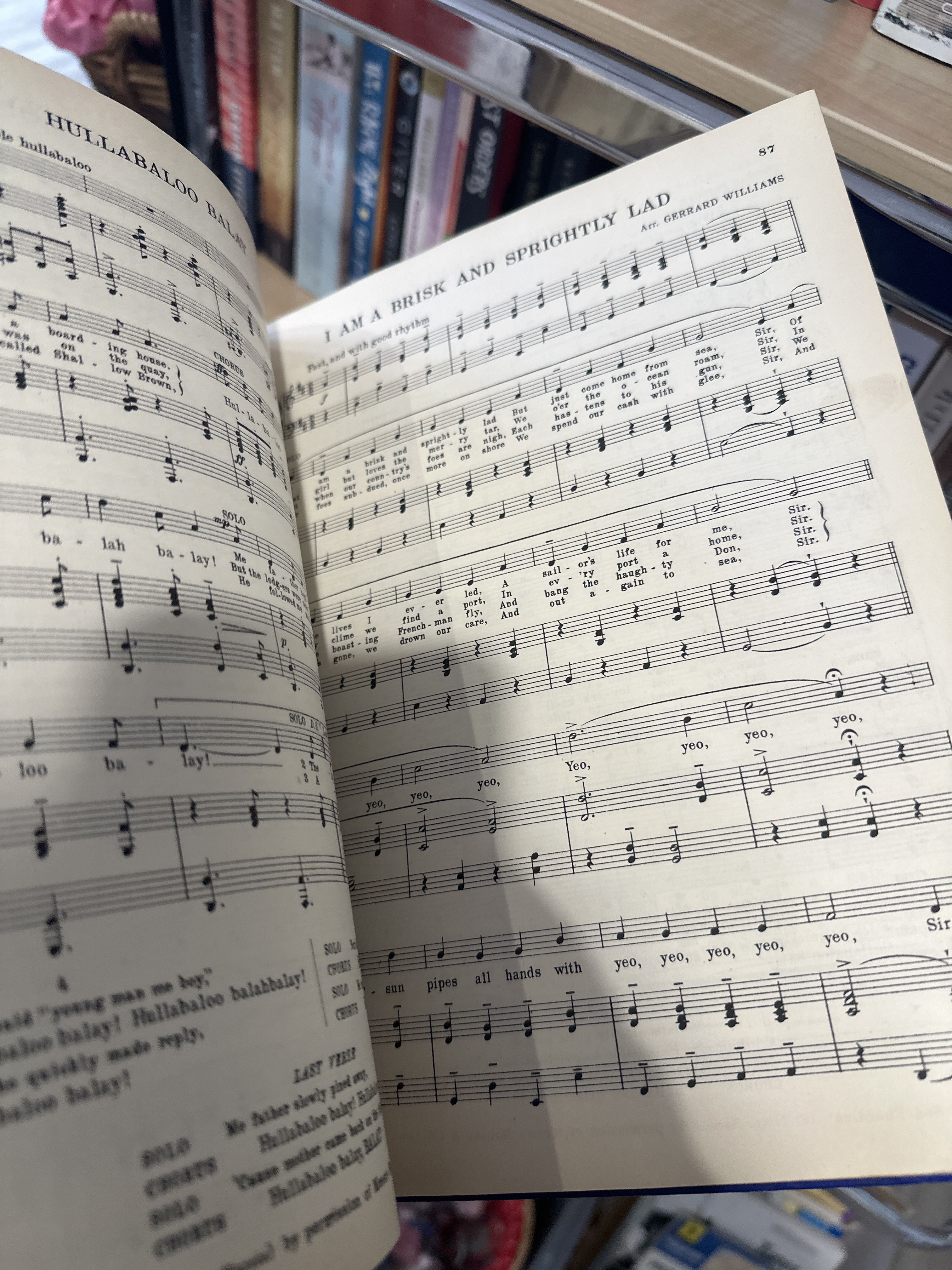
There was a big movement of "community singing" in the UK during the 1920s (mostly pushed by tory rags). They commissioned Novello and similar music publishers to make score compilations to support community sing-alongs. Today while charity shop perusing, I managed to get the Daily Express compilation (edited by John Goss!) and the News Chronicle compilation, and had a read through. Lots of scottish airs, some hymns and carols, a few american spirituals and folk songs, sea shanties and some British patriotic songs. Interesting charity shop find!
Journal paper finally out [loc-005K]
- September 12, 2026
- Liam O'Connor, with contributions from Rayhana Amjad, Rob van Glabbeek
The expanded version of our 2024 paper has finally been published in the journal Information and Computation. This paper includes some of the work that lays the foundation for what I'm now doing with Kai Phan.
ReferenceThe Infinite, in Finite Time [amjad-vanglabbeek-oconnor-2026]
- 2026
- Rayhana Amjad, Rob van Glabbeek, Liam O'Connor
- Information and Computation, Volume 313, Article 105510
- 10.1016/j.ic.2026.105510
An expanded version of Semantics for Linear-time Temporal Logic with Finite Observations.
Linear-time temporal properties, such as those described by Linear-time Temporal Logic, are typically modelled as sets of infinite traces. Yet, in a run-time verification context, such as when testing or monitoring a system, only a finite prefix of the system’s behaviour can be observed. For some properties, these finite prefixes may be definitive—a yes or no answer can be given without further observation. By enriching the semantics of LTL with these definitive prefixes, we give a proper inductive accounting of the semantics of LTL3, a multi-valued variant of Linear-time Temporal Logic for run-time verification applications. The semantic descriptions of LTL3 in previous work are given only in terms of their relationship to conventional LTL. We show that the semantics of LTL and of LTL3 are isomorphic. In addition, we formalise the formula progression evaluation technique, popularly used in runtime verification contexts, and show its soundness and completeness up to finite traces with respect to our semantics. Then, we turn to linear-time properties more generally: using our theory of definitive prefixes, we re-prove the well-known safety-liveness decomposition theorem, and reconstruct the topology of infinite traces. We define monitorability for properties, providing neat topological characterisations for various monitorability classes, and arrange them into a hierarchy. All of our definitions and proofs are mechanised in Isabelle/HOL.
Church Music Corner › 16th Sunday after Pentecost 2026 [loc-005F]
- September 13, 2026
- Liam O'Connor
Da pacem Dómine, sustinéntibus te, ut prophétæ tui fidéles inveniántur: exáudi preces servi tui, et plebis tuæ Israel.
I sang again at St. Michael and all Saints in the morning where we sang Palestrina's Missa Brevis and Wesley's Wash me throughly:
Wash me throughly from my wickedness And forgive me all my sin For I acknowledge my faults And my sin is ever before me
I also joined the choir at Old St. Paul's once again for Evensong and Benediction. We sang canticles by Harold Darke (both Magnificat and Nunc Dimittis), and an anthem by our own John Kitchen: Stand, Holy Cross, a setting of a text by Gordon Graham (link is to the livestream of the service):
Stand, Holy Cross, between my God and me And cast a shadow where my heart can hide Its frail mortality From his perspicuous light. The Cross's shade supplies my sin's disguise. My soul protected, I can turn my eyes; And now the Father’s light allows me view: A world, my world, made new. Then as horizons widen to a farther shore And light on light enlightens more and more, This larger vision brings a deeper peace And sin and sorrow cease. Stand, Holy Cross, between my God and me.